

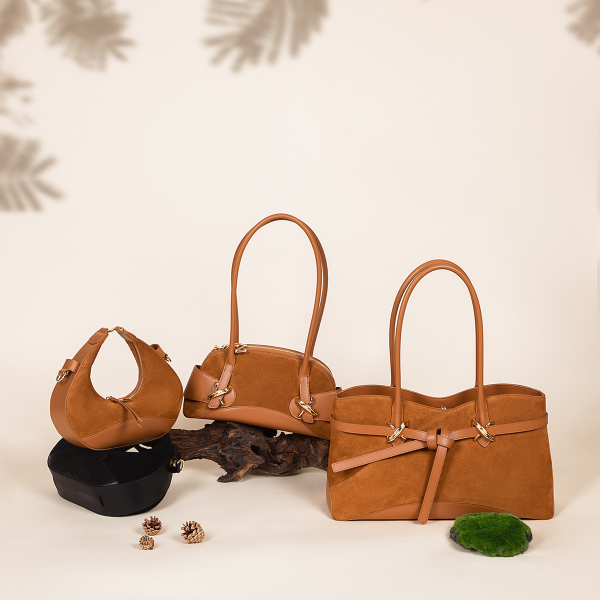
Article: The Ultimate Leather Bag Buying Guide: 12 Things to Check Before You Buy
The Ultimate Leather Bag Buying Guide: 12 Things to Check Before You Buy
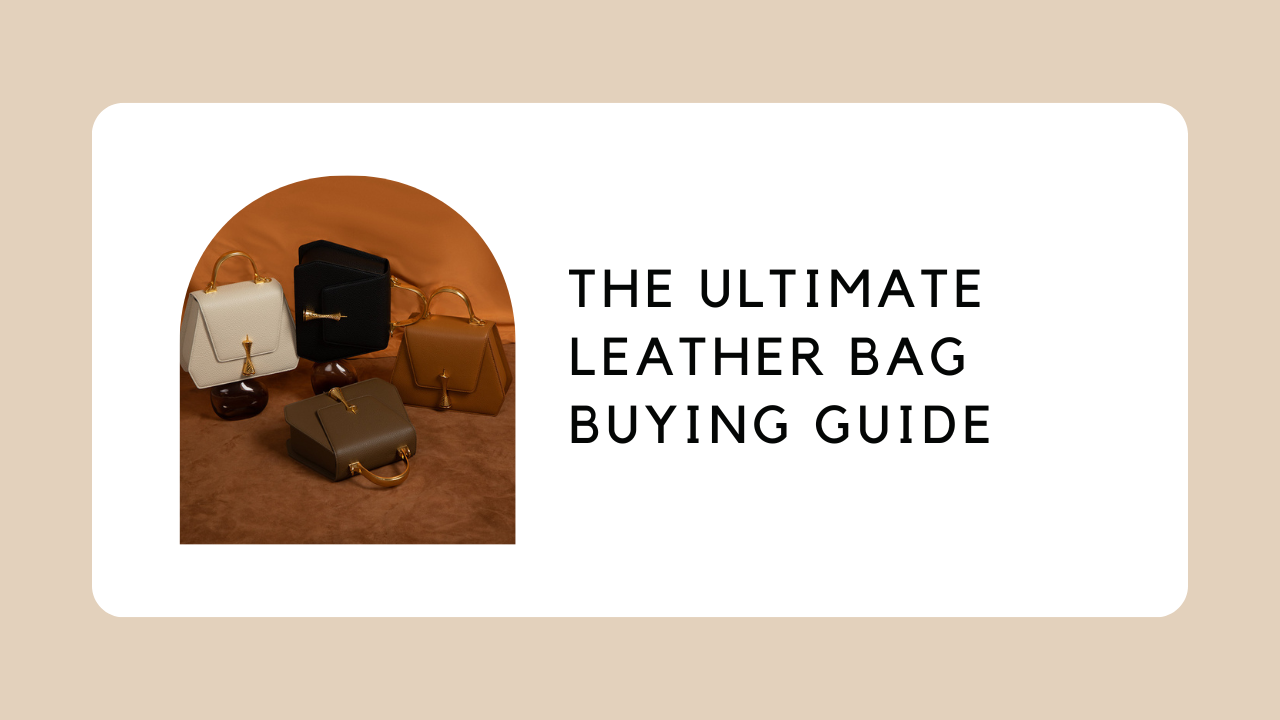
A good leather handbag can cost anywhere from $100 to $3,000. And here's the uncomfortable truth: two bags at the same price can differ wildly in what you actually get. One will look better in ten years than it does today. The other will peel by next winter.
We've spent years making leather handbags, and we've taken apart more bags than we can count — some to learn from, some to find out what went wrong. This guide is everything we know about buying a leather bag you'll still love in a decade, condensed into twelve checks you can actually use in a store or on a product page.
It is not a sales pitch. We've kept the ZORNNA name out of the buying advice itself and saved the brand story for the end. What you read below works whether you buy from us or not — because a well-informed customer is the only kind worth having.

What's in This Guide
- Part 1 — Leather grades: full-grain, top-grain, genuine, bonded, and what each really means
- Part 2 — Real or fake: the seven tests that settle it in ten minutes
- Part 3 — Bag styles: matching the shape to your actual daily life
- Part 4 — Construction: stitching, hardware, lining — the details that decide how long it lasts
- Part 5 — Price math: what you should pay, and the calculation sellers hope you never do
- Part 6 — Care & storage: the five minutes a month that add years to a bag's life
- Part 7 — The 12-point checklist: print it, screenshot it, take it shopping
Part 1 — Leather Grades: The Four Words That Decide Everything
Every hide has two layers. The top layer, with the skin's natural surface, is the grain. The layer underneath is the split — looser, fuzzier, weaker. Where a bag's leather comes from in that stack determines almost everything about how it ages.
| Grade | What it is | Ages how? | Fair price (bag) |
|---|---|---|---|
| Full-grain | Whole top layer, grain untouched | Develops a rich patina | $250+ |
| Top-grain | Top layer, lightly sanded for smoothness | Very well, slightly less character | $150+ |
| Genuine | Real leather, bottom of the ladder; often sanded, coated, embossed | Fine for years, coating can crack | $80–150 |
| Bonded | 10–20% leather scraps + polyurethane binder | Peels, often within 2 years | Under $80 (and that's still too much) |

Two traps to avoid. First, "genuine leather" is real leather — but it's the bottom grade, so don't pay full-grain money for it. Second, "vegan leather" is not a leather grade at all. It's polyurethane or PVC. Plastic. It may be a perfectly fine material for a $40 bag, but nothing about it deserves a premium price tag.
Want the full breakdown of each grade, with photos of how each one ages? We wrote a deep-dive on exactly that: Full Grain vs Top Grain vs Bonded: Which Is Best for Handbags?
Part 2 — Real or Fake? Settle It in Ten Minutes
Modern synthetics are good. Good enough to fool a photo, good enough to fool a quick squeeze in a dim store. But they still can't copy everything, because leather is a natural material and plastic isn't.
The fastest checks, in order of how much they tell you:
- Smell — real leather is mild and earthy; synthetics smell chemical or aggressively perfumed
- Grain — real pores are irregular, like skin; embossed fakes repeat like wallpaper
- Water drop — real leather slowly absorbs and darkens; plastic beads it up
- Thumb press — real leather dents, darkens, and recovers; plastic does nothing or creases forever
- Raw edge — the single most reliable one: real leather's edge is fibrous like suede; fakes show fabric backing or solid plastic

Each test takes under two minutes and none of them needs a single tool. We've put all seven — with exactly what "pass" looks like versus "fail" — into one article: How to Tell if a Leather Bag Is Real: 7 At-Home Tests. If you're holding a bag right now and having doubts, start there.
Part 3 — Which Style Fits Your Actual Life
Grade and authenticity matter, but a bag also has to fit how you move through a day. The three styles people buy most, honestly assessed:
| Style | Built for | Trade-off |
|---|---|---|
| Tote | Laptops, notebooks, workdays, travel carry-on | Heavy leather totes get heavier when full; no hands-free |
| Crossbody | Commuting, errands, days with kids, city walking | Limited capacity; small sizes won't fit a tablet |
| Satchel | Office polish, meetings, structured everyday elegance | Structure means less give; casual weekends can feel stiff |

One rule that saves more regret than any other: buy for the day you have five days a week, not the occasion you have twice a year. A stunning evening clutch is a second bag. The first one should survive a rainy commute, a crowded train, and a toddler's snack-time ambush.
Part 3.5 — Lining, Thread, and Edge Paint: The Hidden Materials
People obsess over the outer leather and forget that the inside of the bag is what touches their things. Cheap lining rips first, and once the lining goes, the bag becomes annoying fast — pens poke through, loose threads snag, and small items fall into the gap between lining and shell.
Cotton canvas is the gold standard for lining: tough, breathable, and easy to repair. Microfiber and synthetic twill can be fine, but thin polyester linings tear within a year of daily use. Check whether the lining is sewn into the seams (good) or glued in as an afterthought (bad).
Thread is another silent failure point. Polyester thread is stronger than cotton and resists rot. Waxed thread not only looks better but also grips the leather fibers, so the seam stays tight. When you see contrasting thread that looks crisp and raised, you're usually looking at someone who cared.
Edge paint and edge burnishing serve the same purpose: protecting the cut edge from moisture and fraying. Burnished edges (polished by friction and wax) age beautifully and rarely flake. Painted edges can look sharper at first, but cheap paint cracks after a few months of flexing. Flex the strap near the edge a few times; if small cracks appear immediately, the edge finish is not going to last.
The rule is simple: the parts you don't see at first are often the parts that fail first. A maker willing to spend money on hidden materials is a maker planning for years, not seasons.
Part 4 — Construction: The Details That Decide the Decade
Good leather badly assembled is still a bad bag. Before you pay, check these four things:

1. Stitching. Look for eight to ten stitches per inch, even tension on both sides, and no loose threads near stress points — strap attachments, zipper ends, corners. Lockstitch beats chain stitch: when a chain stitch breaks, the whole seam unravels.
2. Hardware. Solid brass or steel, not plated zinc. Pick up the zipper pull — quality hardware has heft. Zippers should glide without catching. Run a finger over the zipper teeth; rough edges mean cheap plating that will flake.
3. Edges. Burnished or painted edges should be smooth, with no glue squeeze-out. On full-grain bags, many makers leave edges raw on purpose — that fibrous suede edge is proof of the real thing, not a defect.
4. Lining and stress points. Give the straps a firm tug. They should be anchored with rivets, back-stitching, or full wrap construction — not just surface stitching into soft leather. Interior lining should be taut, not loose enough to bunch.
Part 5 — Price Math: The Calculation Sellers Hope You Never Do
A full-grain cow hide, before it's even cut, costs real money. Tanning, cutting, stitching, hardware — a well-made full-grain bag genuinely can't retail for $49. Nobody's doing you a favor; that price is only possible with plastic or scraps.
Here's the math worth memorizing — cost per year of use:
| Bag | Price | Realistic lifespan | Cost per year |
|---|---|---|---|
| Bonded leather | $50 | 2 years, then peels | $25 — and landfill |
| Good genuine leather | $120 | 6–8 years | ~$17 |
| Full-grain | $320 | 20+ years, looks better with age | ~$16 — and an heirloom |

The $320 bag isn't six times the $50 bag. Per year, it's actually cheaper. That's the whole game: a high price isn't automatically a rip-off, and a low price isn't automatically a bargain. The grade is what ties price to value.
Part 6 — Care & Storage: Five Minutes a Month, Years of Life
Leather is skin. It dries out, it absorbs water, it hates being crushed in a closet for eight months. But it responds to basic attention better than almost any other material:

- Condition 2–4 times a year — a quality leather conditioner keeps fibers supple; dry leather is what cracks, not old leather
- Wipe spills immediately — water rings set fast; blot, never rub
- Stuff and store upright — acid-free paper keeps the shape, a dust bag keeps the finish
- Keep it off the radiator — direct heat pulls the oils right out
We cover the full routine — cleaning steps, conditioning frequency, and how to handle mold in humid climates — in our care guide.

For seasonal storage — the difference between a bag that greets you in spring and one that greets you with creases and mildew — we have a dedicated walkthrough too.
Part 6.5 — Six Mistakes First-Time Buyers Make (And How to Avoid Them)
Most bad purchases are not caused by bad luck. They are caused by predictable traps that look reasonable in the moment. Here are the six we see most often:
1. Falling in love with a render. A perfectly lit 3D render can make any material look like Italian leather. Insist on real close-ups of grain, raw edges, and stitching. No close-ups usually means there's something to hide.
2. Trusting the word "genuine" at face value. Genuine leather is real, but it's the bottom grade. If a brand could say "full-grain," they would. The fact that they said "genuine" tells you exactly where on the ladder the bag sits.
3. Buying a "splurge" bag for a fantasy life. The structured satchel that looks amazing in your online cart might be perfect for a gallery opening. If your real life is coffee spills and subway commutes, it's the wrong bag. Buy for the life you live five days a week.
4. Ignoring the weight. Leather is not light, and a large full-grain tote filled with a laptop, charger, and notebook can feel like a gym bag. If you walk a lot, test the weight empty first.
5. Expecting perfect uniformity. Real hides have scars, wrinkles, and color variation. That's not a flaw; it's the proof. A bag that looks mechanically identical across every inch is almost certainly coated or embossed.
6. Skipping the first-year care routine. New leather doesn't need much, but it does need something. One conditioning in the first six months prevents the tiny surface cracks that eventually become big cracks. It's a five-minute job that pays for itself.
Part 7 — The 12-Point Checklist
Everything above, compressed. Screenshot this before your next shopping trip:
- The label names a real grade: full-grain, top-grain, or genuine — not "leather-like," not unexplained "vegan premium"
- The smell is mild and earthy, not chemical or perfumed
- The grain is irregular under your phone's zoom — no repeating pattern
- A water drop (on a bag you own) absorbs and darkens
- A thumb press dents, darkens, and recovers
- The raw edge shows fibrous, suede-like structure
- Stitching is dense (8–10 per inch), even, with no loose threads at stress points
- Hardware is solid and heavy, with crisp engraving
- Straps are anchored with rivets or wrap construction
- The price matches the grade (full-grain under $100 is a lie; bonded over $80 is a rip-off)
- The seller is transparent: tannery, country of production, exact material
- The style fits your five-days-a-week life, not your twice-a-year occasion
Ten or more boxes ticked? You're holding a bag worth buying. Six or fewer? Put it down — there are thousands of honest bags out there, and now you know how to find them.
Every ZORNNA Bag Passes All 12
Full-grain leather from traceable tanneries. A leather certificate in every box. Lockstitch construction, solid brass hardware, and craftsmen who run the checks above on every single hide — because a bag you never have to second-guess is the only kind worth making.
Shop Full-Grain Leather HandbagsFrequently Asked Questions
How much should I spend on a quality leather handbag?
For genuine leather, expect $80–150. For top-grain, $150–250. For well-made full-grain, $250–500. Above that, you're paying for design and brand, not durability — which can be worth it, but know which one you're buying.
What leather grade is best for everyday use?
Full-grain for durability and aging, top-grain if you prefer a smoother, lighter feel. Both handle daily carry for decades. Genuine leather is fine for lighter use or tighter budgets; bonded leather isn't recommended for anything you want to keep.
Is a more expensive leather bag always better?
No. Price tracks grade and construction, but also branding and margin. Use the 12-point checklist, not the price tag, as your guide — a $300 bag that fails five checks is worse than a $150 bag that passes all twelve.
How can I tell a good online store from a bad one?
Real close-up photos (not renders), a named material grade, tannery or country information, and reviews that mention the leather aging well. Vague "premium materials" language plus only studio renders is the classic pattern to walk away from.
Do leather bags need a break-in period?
Full-grain and top-grain bags soften noticeably in the first month of use — the leather relaxes around your contents. Genuine leather with a heavy coating softens less. If a bag stays stiff and plasticky after six weeks, that tells you something about the material.
What's the single most important thing to check?
The material grade on the label, confirmed by the raw-edge test. Everything else — stitching, hardware, price — follows from what the material actually is.
That's the whole guide. Twelve checks, four grades, one piece of honest math: buy the grade you can afford, verify it's real, take five minutes a month to care for it, and a leather bag will outlast most of what you own — including, probably, the next three bags you would have bought instead.
Related guides: How to Tell if a Leather Bag Is Real: 7 At-Home Tests · Full Grain vs Top Grain vs Bonded
 Author: Seuruyalvi - Chief Designer
My name is Seuruyalvi, as the chief designer at ZORNNA, I am responsible for overseeing the creative direction of the brand, from conceptualization to final product design.
Billets de blog
The Ultimate Leather Bag Buying Guide: 12 Things to Check Before You Buy
A good leather handbag can cost anywhere from $100 to $3,000. And here's the uncomfortable truth: two bags at the same price can differ wildly in what you actually get. One will look better in ten ...
En savoir plus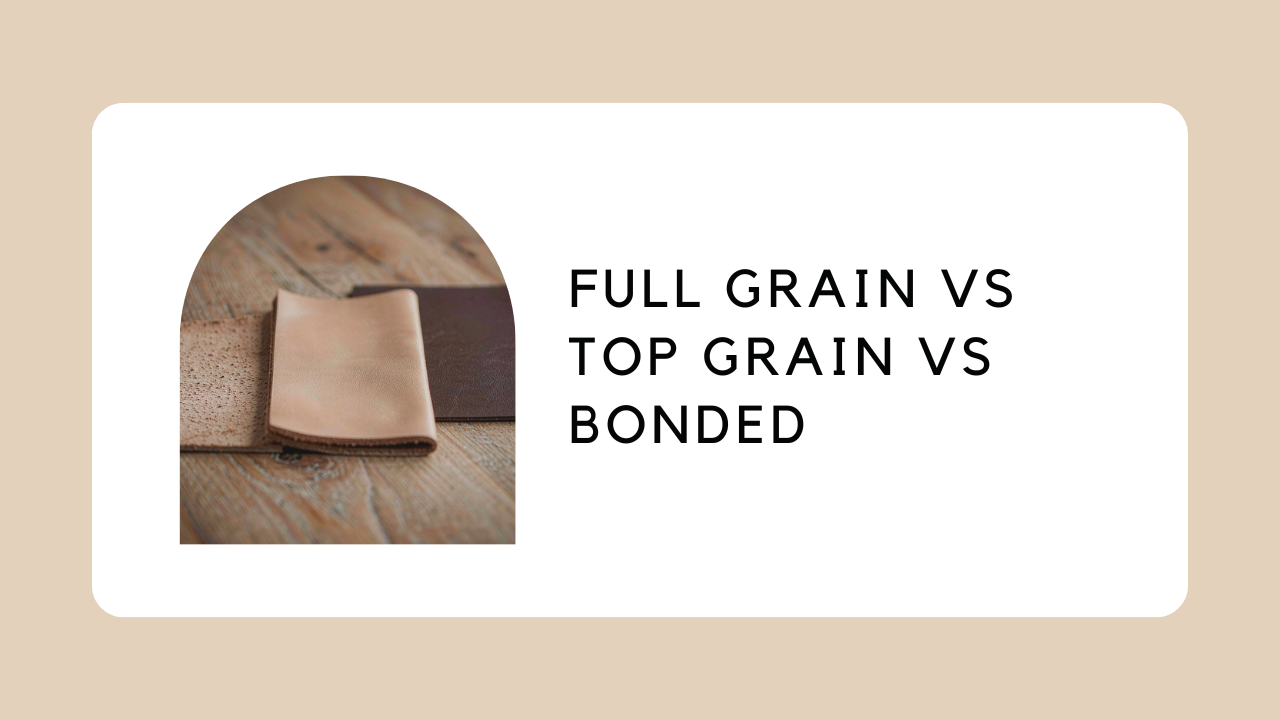
Full Grain vs Top Grain vs Bonded: Which Is Best for Handbags?
Two handbags sit side by side in your browser. Both say "real leather." One costs $89, the other $389. And if you're like most shoppers, you close the tab more confused than when you opened it. Her...
En savoir plus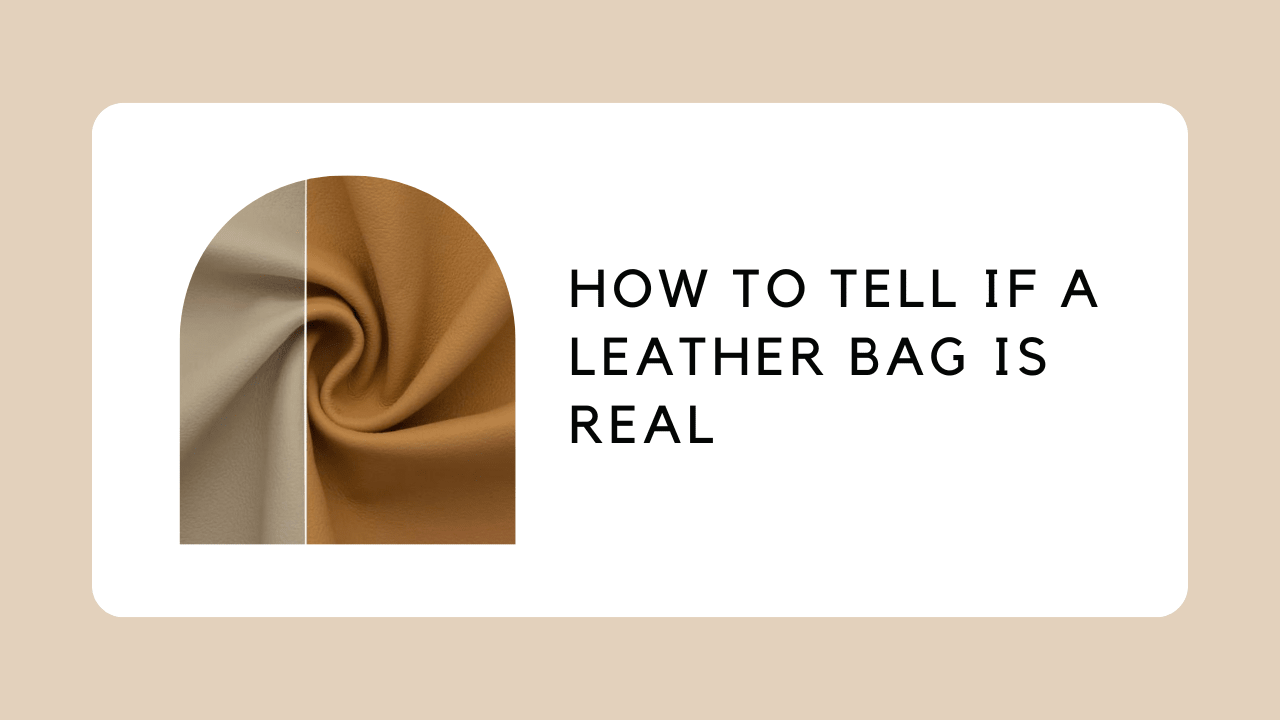
Comment savoir si un sac en cuir est authentique : 7 tests à réaliser chez soi
Comment savoir si un sac en cuir est authentique : 7 tests à réaliser chez soi Vous avez tout fait correctement. Vous avez économisé, lu les avis, comparé les prix et finalement acheté ce que l'ann...
En savoir plus
